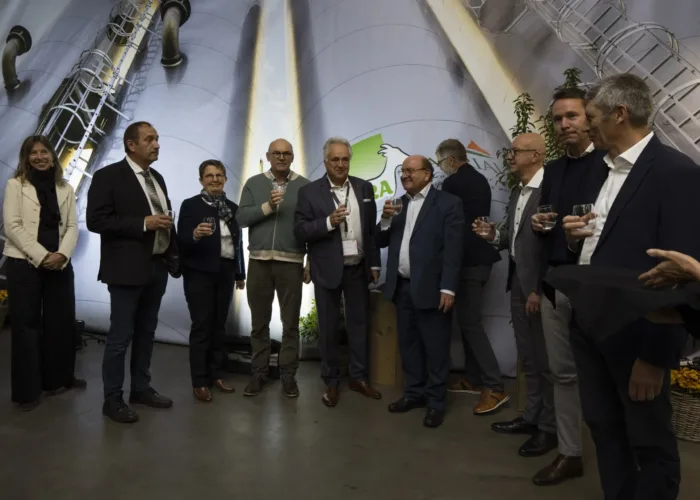
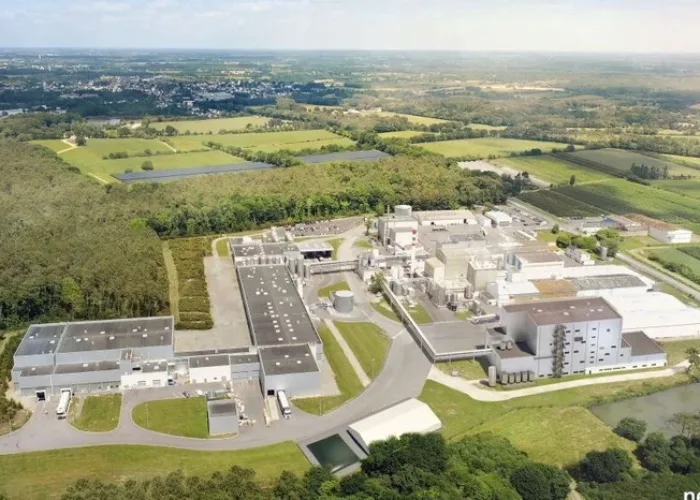
Agrial (new window) is rolling out a major industrial and environmental investment of 6.3 million euros at its CAPRA cheese plant in Belgium. As part of the agricultural and agri-food cooperative’s Climate Plan, this project will reduce the site’s carbon emissions by 79% and save nearly 20,000 m³ of water per year. It is one of the most significant decarbonization projects undertaken by the cooperative in recent years. This initiative illustrates the cooperative’s ambition to balance environmental transition, industrial performance, and the value creation of agricultural products.
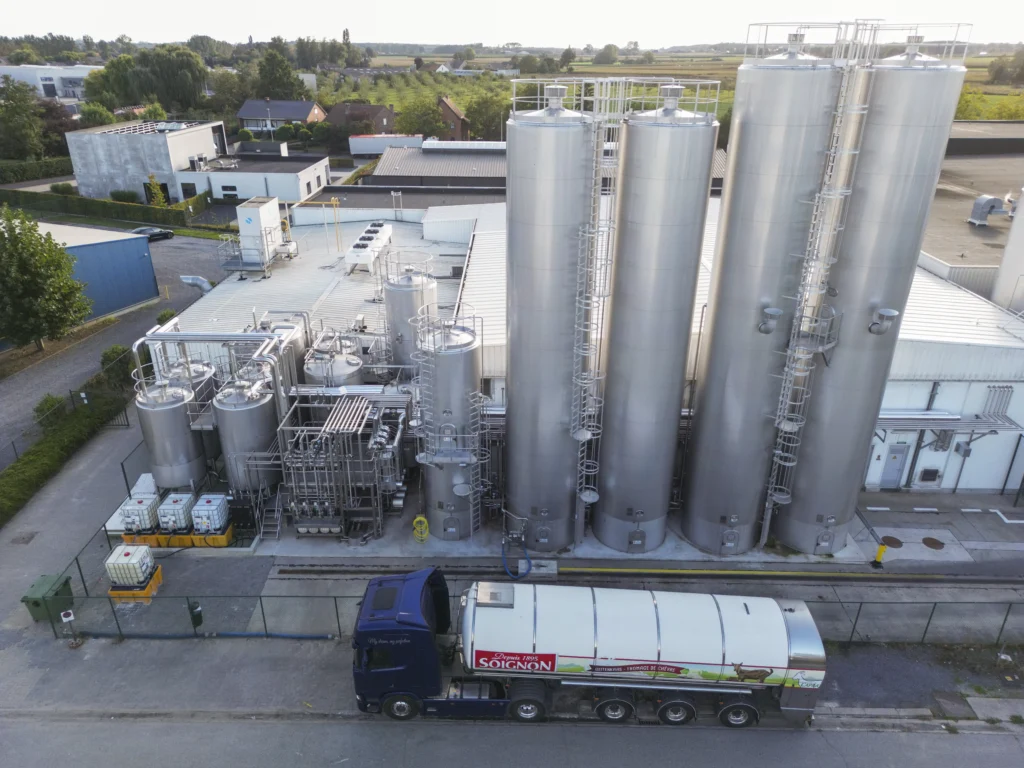
Based in Halen, at the heart of the Belgian goat farming industry since 1982, the CAPRA cheese factory plays a strategic role in the European development of the dairy sector. Each year, the facility collects 60 million liters of goat milk in the Benelux region from 48 partner producers. It produces 9,000 to 10,000 metric tons of cheese, primarily aged “bûchettes” and fresh “pyramides,” sold under the Soignon brand for the Northern European market, among others.
A key investment under Agrial’s Climate Plan
Through this project, Agrial is advancing one of the key objectives of its Climate Plan, which is to reduce the agricultural and agri-food group’s carbon footprint by 35% by 2035 compared to 2019, in particular by halving direct greenhouse gas emissions across its operational scope (energy, transportation, packaging, and waste). As such, this investment ranks among the most ambitious environmental projects currently being carried out by Agrial at its industrial sites.
For CAPRA, this investment marks a major milestone in the modernization and sustainable transformation of its industrial facilities. Thanks to innovative reverse osmosis technology, the site will be able to concentrate the permeates from milk and whey four to five times. This will significantly reduce the volumes to be transported and cut the site’s carbon emissions by 79%. The project will also enable the recovery and reuse of a portion of the water derived from milk, resulting in a savings of nearly 20,000 m³ of water per year—equivalent to 23% of the site’s annual water consumption.
New opportunities to better utilize dairy by-products
Beyond its environmental benefits, this investment also opens up new avenues for the economic valorization of milk by-products. Previously destined for the pig industry, these by-products will now be separated, concentrated, and better utilized for new markets. The mild permeate can thus be used for calf feed, while the acidic permeate will benefit from improved valorization within existing livestock sectors. This development allows CAPRA to better utilize its by-products, contributing to the overall performance of the site and the sustainable development of the European goat farming sector.
“This investment fully embodies Agrial’s mission: to build sustainable markets and support the development of agricultural sectors with a promising future. “With CAPRA, we are reaffirming our commitment to providing long-term support to the European goat industry while developing the industrial tools it will need to meet the economic and environmental challenges of the coming years.” Bernard Guillard, President of Agrial
“This project fully embodies Agrial’s climate goals of investing in the sustainable transformation of its industrial facilities while enhancing the value of agricultural production. At CAPRA, we are working to reduce our carbon footprint, conserve water resources, and maximize the value of byproducts. This is a flagship project of our Climate Plan, supporting a high-performing and responsible European goat industry. ” Julien HEILLAUT, CEO of Agrial
Learn more about this project: